Palms for cold climates

Cold-hardy palm trees that survive frost

A garden with a tropical feel is possible even where it freezes in winter. We help you choose the hardiest palms: the ones that cope with inland, mountain and central and northern European frosts.

What makes a palm cold-hardy?

Not all palms are tropical. Many species come from mountains, high deserts or temperate regions where frost is common. These palms have tougher leaves, slow growth and a central bud protected by fibres that insulate it from the cold.

Besides the species, three things matter a lot: the size of the plant (mature specimens withstand more than young plants), soil drainage (cold combined with wet soil does the most damage) and the position in the garden.
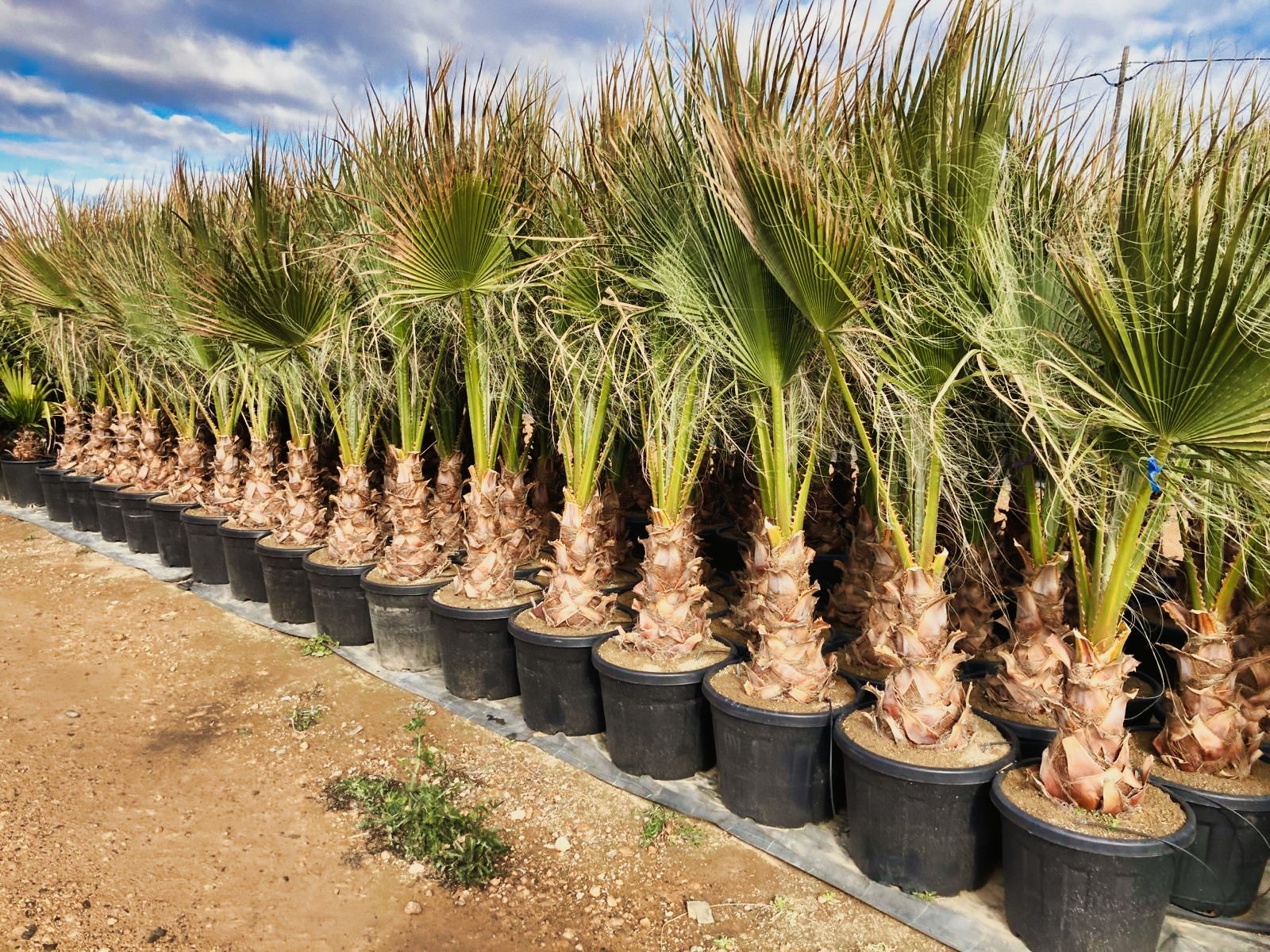
Row of cold-hardy fan palms at the Tropicalia nursery

The hardiest palms we grow

Approximate minimum temperatures for mature, well-established plants in well-drained soil.

down to -15 °C
The classic hardy palm. Fibrous trunk, fast growth and very adaptable.

down to -15 °C
Small, stiff leaves that stand up very well to wind. Ideal for exposed gardens.

down to -15 °C
A dwarf palm with no visible trunk, very resistant to cold and humidity.

down to -15 °C
A mountain palm from Pakistan and Afghanistan. Outstanding in cold, dry climates.

down to -10 °C
The Mediterranean fan palm, native to Europe. Tough, compact and low-maintenance.

down to -10 °C
The blue fan palm from the Atlas Mountains. Silvery colour and great hardiness.

down to -10 °C
The jelly palm, with arching bluish leaves and edible fruit.

down to -10 °C
The Mexican blue palm. Very resistant to dry cold and drought.

down to -8 °C
The California fan palm. Hardier than Washingtonia robusta, with a thicker trunk.

Values are approximate. Actual hardiness depends on the age of the plant, the duration of the frost and soil moisture.

5 keys to getting your palm through winter

1. Plant in spring

That way the palm has the whole summer to root before its first winter.

2. Make sure drainage is good

Cold combined with waterlogged soil is what damages roots most. Add gravel or sand if your soil is clay.

3. Choose a sheltered spot

Next to a south-facing wall the temperature can be several degrees higher than in the open.

4. Protect the bud in the first years

In hard frosts, tie the leaves upwards and cover the heart with breathable winter fleece.

5. Go for larger specimens

A mature palm with a formed trunk withstands cold much better than a young plant. We have ready-to-plant specimens at our nursery.

Not sure which one will survive in your garden?

Tell us where you are and how much space you have. We will recommend the palm best suited to your climate, with no obligation.